NASP Maintains Focus On Impact Through 40-Year History By LINDSAY SAIENNI The National Association of Securities Professionals continues to drive forward its mission expanding access for underrepresented communities in the investment and financial services industry more than 40 years after its founding.
At the time of the organizationʼs founding in 1985, there was a growing interest in financial services from diverse groups, including investment banking and municipal banking, according to NASP President and CEO Miguel Thames, who stepped into the role in 2024 and also serves as founder and managing partner at TIG Advisory, a firm that works with institutional investors in the U.S. and Africa.
“That was also a period when many cities had their first or second African American mayors and many of the larger municipal banking houses realized they did not have real strong relationships with the incoming administration. So, they were looking for talent in their ranks that they felt would help them in terms of securing business,” Thames said. “So, it was a great time for the business reason to drive the elevation and development of that kind of talent.”
NASP has evolved since 1985 and is “much broader than municipal banking, and while we are still the organization of securities professionals, the financial services industry now is much broader than it was at that point in time,” he added. Today, Washington, D.C.-based NASP stands at roughly 450 members nationally and boasts nine local chapters in Atlanta, Chicago, Detroit, New York, Ohio, Philadelphia, Northern California, South California and Texas.
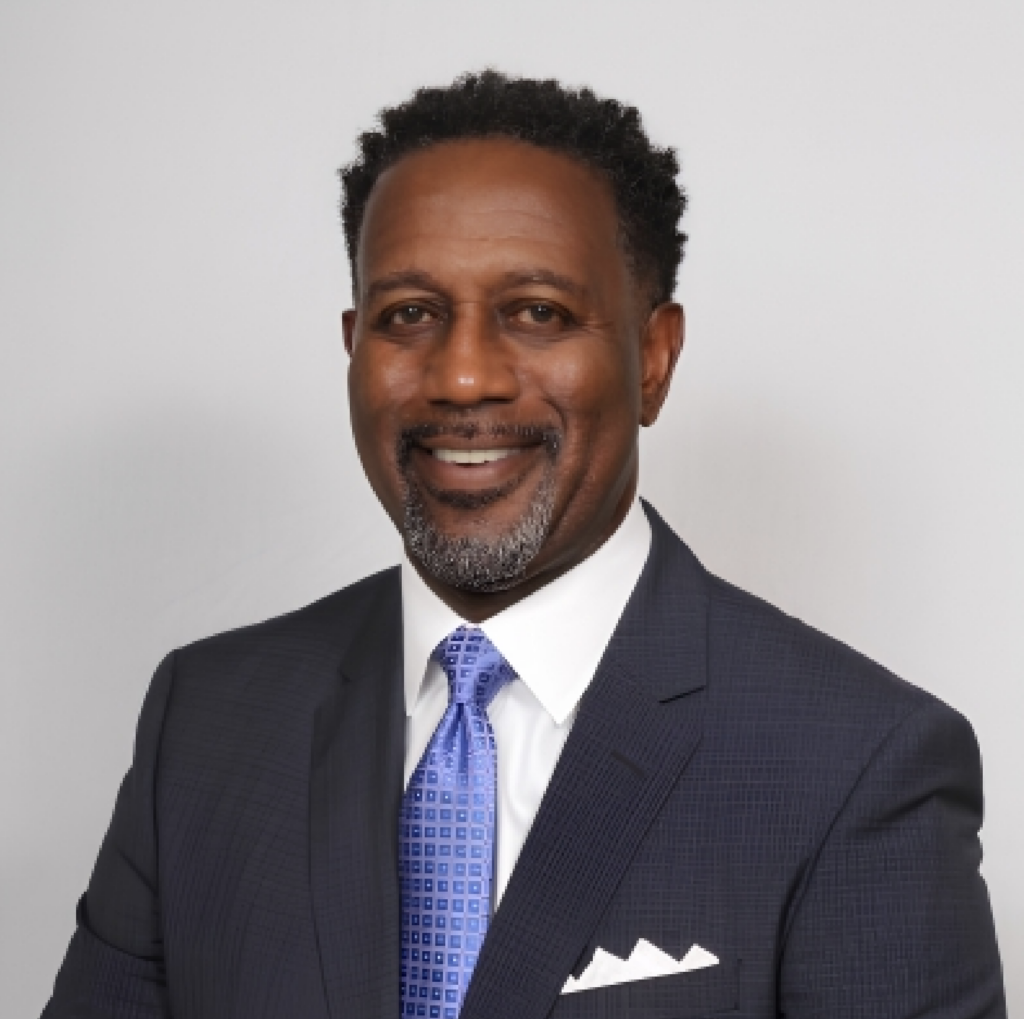
Miguel Thames
NASPʼs member base spans younger professionals with zero to five years in the industry to those with more than a decade under their belts and also has a student membership for full- time undergraduate and graduate students.
“NASP doesnʼt have chapters on campuses, but we do understand and appreciate that if there is no pipeline, there is no us,” Thames said. “Very few people woke up when they Miguel Thames were four years old and said, ʻI want to be a financial services professional.ʼ We know that thereʼs a path, so you have to be respectful of the fact that sometimes itʼs about exposing younger people, college students, high school students to some of the opportunities, the expansive opportunities in financial services.”
“But we also think that, when you look at the industry, thereʼs a reason that groups are ʻunderrepresentedʼ and so with that comes the belief that if we can find a safe space for development, a safe space to have conversations, we think thatʼs great for retention, we think thatʼs good for companies, we think thatʼs good for our members, we think thatʼs good for the talent pipeline,” he continued. When it comes to the benefits of a NASP membership, Thames noted that “in order for companies to be the best they can be, they have to find the best talent.”
“All we want to do is try to create opportunities where we can work through the bias so that companies have the best opportunity to grow, the best opportunities for talent,” he said. “In our industry, you have to drink the Kool-Aid that diversification is great. I mean, if youʼre an asset manager, a portfolio manager, you want diversification. I always ask people, why do they think that the benefits stop at portfolios? Because what you really want to get is diversification of perspectives in businesses, and that comes with diverse workforces and diverse management teams and someone that raises their hand and asks the question that hasnʼt been asked because youʼre thinking about the material that theyʼre looking at with a different context, a different life perspective. And that allows, I think, for better decisions to be made as you think about more possibilities and more what ifs.”
“So, what weʼre really trying to get to, and itʼs amazing that you have to fight for this, is how do you get the best perspectives, broadest perspectives in the room? How do you capture the effectiveness of a workforce that thinks about things differently in terms of problem solving so that you can grow?” he added.
Another major benefit of NASP membership is its network of industry experts and professionals – and the connections that can be made at the organizationʼs chapters, according to Thames.
“Whether youʼre meeting people that you consider your peers, in your specific segment of the industry or broader segments of the industry, whether youʼre meeting your next advisor or mentor in terms of someone thatʼs more seasoned or whether youʼre at that point in your career where you want to help those behind you and youʼre looking to be involved like in our fast track high school program or some sort of college thing – the chapters are where the interactions happen,” he said. “The chapters are where we really want to drive membership growth.Thatʼs where people get excited about the touch, the feel, the engagement. Thatʼs where sponsors are able to have an impact in the environments in which theyʼre working.”
A significant component of NASPʼs commitment to the space is its advocacy and public policy work and the organization has had “representatives on Capitol Hill” reach out for advice to “make sure theyʼre understanding the needs and concerns of their constituents,” according to Thames.
There is also the NASP Institute, a 501(c)(3) initiative that houses the career development, research and executive coaching arms of the organization.
Where the work and mission of NASP really shines is its Annual Financial Services Conference, with the 37th iteration of the event being held in Detroit earlier this month, bringing together professionals from across the country.
Thames describes it as a “strategic powwow.”
“Itʼs a chance for us to get municipal and federal leaders together and talk about some of the challenges in terms of the industry and regulations and how to work through that,” he explained. “It continues to be a great opportunity to convene asset allocators that do believe that their beneficiaries are helped by the enhanced returns of working with smaller firms and managers of diverse thinking. To convene and meet some of those managers and advisors that are looking to build their businesses but need people that are willing to work with them and not put up fences, but open doors.”
This yearʼs conference had over 95 asset allocators – a record for NASP, according to Thames.
“For me the conference is a two-day opportunity for people to hopefully get a little bit away from the office,” he said. “We encourage people to go to sessions where they may not normally have an interest, itʼs a great chance to meet some new people [outside of] your industry sessions. But also a chance to network, to talk, to challenge.”
NASP has been intentional in changing the narrative of inclusion, with its tagline being “inclusion is business,” Thames said.
“Because it is,” he continued. “This is not an afterthought. This is not a ʻsomething nice to do.ʼ Itʼs not making up for past sins. This is about finding the best people, regardless of where they may be, so that you can be the most competitive company you can be.”
The conference also serves as an opportunity to “bring in people that may not have had that exposure to talent, to leadership, to the pipeline, and they leave hopefully feeling a little more empowered and a little bit more invigorated about why itʼs a business imperative that we make sure we have people who are diverse at the table so we can be a better company,” he added.
Lately, Thames has been focusing on collaboration with other industry groups like the Association of Asian American Investment Managers and New America Alliance.
“I donʼt think we or many organizations like NASP have the bandwidth to be redundant. Weʼre not trying to duplicate what other organizations are doing,” Thames said. “One of the things weʼve been trying to do more of since I became president is actually collaborate. I reach out to Jim Park at AAAIM, AJ Hernandez at New America … What are you guys working on? How are you doing this? If youʼre doing this well, and weʼre doing it, can we just lean in with you? How do we help you?”
“I think we all are talking more because this issue is bigger than any one of our groups and we want to find ways to work together. And our voice is more effective and powerful when we intersect on the issues of inclusion, the inclusion of all talent – if thereʼs a meritocracy, talent should be able to rise to its own level without additional hurdles, without bias – that is a unifying theme and everybody gets that,” he said, noting that the conference is a good time to see them.
NASP will continue its mission in the future as “I think the last two years has sort of pushed out our shelf life,” Thames said, admitting he is excited for a future where organizations like NASP will no longer be needed.
“To me, DEI was the marketʼs way, the countryʼs way of getting a square peg in a round hole. You had bias, and bias created wealth gaps, it created differences in employment, promotion rates, board representation, I mean you name it. So, DEI was a way to address that,” he said. “It didnʼt address the root of the problem, but it did address the symptoms by making sure we focus on hiring here, making sure that weʼre intentional about board representation. We now canʼt do that. Weʼve been told legally we canʼt address the results of that bias. So, we have to address bias itself. Tougher, but thatʼs the path thatʼs open.”
“I think we have to continually bang that drum about why a broader inclusion of talent, a broader diversity of thought is going to be in the best interest of business,” he continued. “I think thatʼs why NASP is so important now, because my board has really been supportive of how weʼve pivoted. We have the same mission and goals, but thereʼs a different way you have accomplish that and we have to be clear on why this makes sense for business.”
In honor of Juneteenth, NASP recognizes the day and “the significance of sometimes news travels slowly and big ships turn slowly, but they do turn,” according to Thames.
“Sometimes when you look back, it helps you see where you are. And when youʼre in times when you donʼt think things are what you want them to be or you feel challenges, having that perspective of where youʼve come from I think is grounding,” he said.
“I think as part of the fabric of this country, that makes this country a really good country, is that culturally so many people have contributed in spite of hurdles, in spite of prejudices, in spite of obstacles,” he continued. “And we should continue to embrace that, especially as books are being banned and ʻyou canʼt teach thisʼ and ʻI donʼt want my kids to learn something thatʼs going to hurt their feelings.ʼ Weʼre doing young people a disservice when they find out when theyʼre 25 or 30 why thereʼs so much tension in this country. I think younger people really can fix this, but they have to hear about it before they get to be that old. I just think by not giving them, age appropriately, the facts of the good and bad of what happened here, weʼre not enabling them to be the best leaders they can be and make this country the best it could be. Weʼre handicapping them. So, I think things like Juneteenth, now with the internet, all these social platforms, we can send something out and get 3,000, 4,000 looks in a couple hours … youʼve got to use that to message, build collaboration, build cohesion, talk about inclusion. So, I think this is a great opportunity to encourage people to take whatʼs been done and just keep moving forward.”
Copyright Notice: Copyright 2025 by Financial Investment News (FIN) and GRLM, LLC. All rights reserved. Photocopy permission is available solely through GRLM, LLC, Financial Investment News. Copying, photocopying or duplicating this publication in any form other than as permitted by agreement with FIN is prohibited and may constitute copyright infringement subject to liability up to $100,000 per infringement. For photocopy permission, back issues and bulk distribution needs, please contact Rob Regan at 212-627-7615 or e-mail rob@fin-news.com